

Ever wonder if your hybrid cluster is firing on all cylinders? Bringing together data from on-premise servers, virtual machines, cloud instances, and network devices into one view might look complex, but it actually makes troubleshooting much easier. When you can check CPU usage, memory load, and network render time in one place, problems show up fast. In this post, we show you how a unified monitoring setup not only simplifies oversight but also boosts performance and cuts down your troubleshooting time.
Unified Monitoring Framework for Hybrid Clusters
Centralizing data collection builds a strong monitoring framework for hybrid clusters. We gather data from on-premise servers, virtual machines (VMs), cloud instances, and network devices in one clear place. This stops data from scattering and slows down troubleshooting. When you see all key details, like CPU usage, memory load, and network render time, together, you can quickly spot and solve issues.
Merging these varied resources into one observability solution improves overall oversight. A unified dashboard highlights unusual behaviors and maps important dependencies. This means you continuously watch over core components that support your business service level agreements (SLAs). With data collected from both traditional data centers and modern edge locations, you get a complete view that helps in cross-environment diagnostics. This setup follows proven methods used in high-performance hybrid GPU clusters, offering real improvements in performance management.
Key data sources include:
| Data Source | Description |
|---|---|
| Servers | Physical computer systems on-site |
| Virtual Machines (VMs) | Software-based emulations of physical computers |
| Network Devices | Routers, switches, and other connection tools |
| Storage Systems | Solutions for data saving and retrieval |
| Edge Locations | Modern deployments close to data sources |
| Applications | Software tools used in business operations |
Using an aggregated approach leads to noticeable improvements in detecting and resolving issues. In some case studies, teams reported a 15–20% drop in Mean Time to Detect (MTTD) and Mean Time to Resolve (MTTR). With a clearer overview, monitoring turns into a powerful tool to protect business operations, cut costs, and speed up incident response.
Instrumentation and Configuration for Hybrid Cluster Monitoring

When you set up hybrid cluster monitoring, you can choose between using agents and going agentless. Tools like the Azure Monitor Agent or AWS SSM Agent support agent-based monitoring, while SNMP polling works without an agent. This decision ensures both modern systems and older hardware are covered. For example, using an agent on new nodes helps keep your setup consistent even in a large, complex environment.
Next, build log analysis pipelines to collect system logs and event data from every part of your network. These pipelines connect activities from different sources for a clear overall view. By integrating incident logging, alerts are automatically recorded and combined to speed up finding the root cause. A good log pipeline might capture a sudden spike in CPU usage along with memory load details, helping you diagnose issues faster.
Finally, set up alerts with clear thresholds to keep noise to a minimum. For instance, you can trigger an alert when CPU usage goes above 80% for more than 5 minutes or when memory usage exceeds 90%. This careful setup reduces false alarms while ensuring that important issues are noticed quickly. When these limits are breached, the automated alert system notifies your team immediately so you can take swift action.
Automated Maintenance Workflows in Hybrid Clusters
When alerts signal a problem, our automated runbooks jump into action. They immediately trigger scripts that restart services or nodes without any extra steps from you. For example, if a node stops responding, an automated command reboots it quickly to keep disruptions to a minimum.
Our autoscaling setup adjusts compute instances in real time. When the load increases sharply, additional nodes are added to evenly share the work. And when the demand drops, extra nodes are removed to make sure you only use and pay for what you need.
Maintenance scheduling software handles updates and patch windows with ease. Firmware and security updates take place during planned maintenance windows, which reduces manual scheduling work and keeps everything in sync with your business needs. This proactive approach smooths the update process and prevents unexpected interruptions.
Self-healing scripts continuously monitor node performance. As soon as a node becomes unresponsive, these scripts automatically restart the service or reboot the system. This self-healing process keeps your hybrid cluster running at its best while cutting down on manual oversight and reactive troubleshooting.
Monitoring and maintenance of hybrid clusters: Peak Health
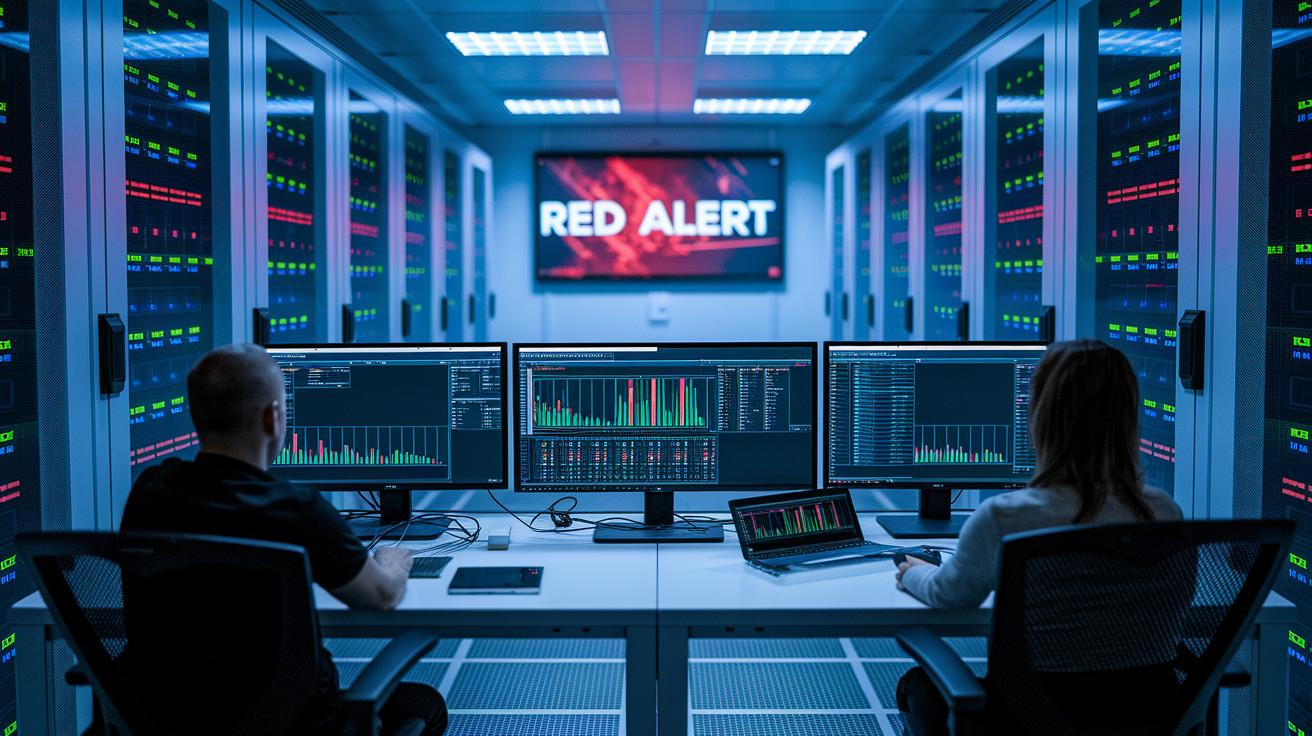
AI-powered anomaly detection plays a key role in troubleshooting. It watches important metrics like disk input-output and network speed to spot signs of trouble. For example, it can alert you when a sudden rise in disk activity hints at a drive failing before it slows everything down.
We also rely on log query alerts to find recurring error patterns. These alerts compare past records with live data to quickly uncover unusual trends. This helps our team fix issues as soon as they appear, cutting downtime effectively.
All alerts and errors are recorded using journaling frameworks. This method helps us dive deep into root causes and offers a clear timeline for tracking problems. When something goes wrong, good logs let our team pinpoint and resolve the issue fast.
Our monitoring includes keeping an eye on early warning signs like gradual CPU slowing or small memory leaks. Spotting these hints early means we can handle them quickly, preventing small issues from turning into major performance problems.
Performance Benchmarking and Capacity Planning for Hybrid Clusters
We start by building performance baselines from historical data. This helps us set clear targets such as reducing the mean time to resolve (MTTR) from 4 hours to 3.2 hours in 90 days and to 2.5 hours in six months. By studying past trends, we learn how the system behaves under different loads. For example, reviewing a month of logs and noting peak response times gives us actionable goals to drive improvements in the hybrid setup.
We also keep a close eye on real-time metrics like CPU use, memory, storage IOPS, network bandwidth, and time to first byte (TTFB). If any metric, like memory or TTFB, spikes unexpectedly, we take immediate action. This constant monitoring helps us spot and fix potential issues right away.
Next, we use dynamic scaling and resource balancing to manage workloads across on-site and cloud nodes. We set clear thresholds, so when resource use gets too high, the system automatically adds new compute instances. For example, a steady rise in network bandwidth can trigger extra instances to ease the load. At the same time, balancing algorithms ensure that tasks are distributed evenly, so no single node becomes a hotspot. This keeps the entire hybrid cluster running smoothly.
Case Study: Observability and Maintenance Outcomes in Hybrid Clusters

Pine Labs boosted their operations by unifying the monitoring systems across their mixed on-premises and cloud clusters. They improved the time it takes to spot issues (Mean Time to Detect) and to fix them (Mean Time to Resolve) by 15–20%, with plans to improve even further by another 40–50% later on. By automating routine maintenance and cutting down on unscheduled downtime, they saved nearly a million dollars a year. Regular reviews and detailed audits helped keep data safe and ensured they met service level agreements, while strong continuity strategies and backup plans led to a 30% drop in outages.
| Metric | Before | After |
|---|---|---|
| MTTD | Standard detection times | 15–20% faster detection |
| MTTR | Baseline resolution times | 15–20% quicker resolution |
| Cost Savings | High operational costs | Multi-million-dollar savings |
| Outage Reduction | Frequent interruptions | 30% fewer outages |
The case shows that centralizing monitoring helps cut down the time to detect and resolve issues while saving costs. Regular audits and reviews confirm that data stays secure and service standards are met. Pine Labs’ success proves that combining complete oversight with automated routines makes systems more reliable and boosts overall business performance.
Final Words
In the action, we showcased a unified approach for hybrid cluster observability. We covered centralizing data, setting up precise alert thresholds, and automating maintenance workflows to boost detection and resolution speeds.
We explored methods from agent-based monitoring and log pipelines to dynamic scaling and troubleshooting tactics. These steps help cut downtime and lower overall costs, driving faster production iterations.
This framework optimizes the monitoring and maintenance of hybrid clusters while keeping systems reliable and efficient. We look forward to a smoother, more responsive workflow ahead.
FAQ
What is the purpose of a unified monitoring framework for hybrid clusters?
The unified monitoring framework for hybrid clusters centralizes data from on-prem servers, virtual machines, cloud instances, and more. It maps critical dependencies to meet business SLAs and reduce downtime.
How do agent-based and agentless monitoring differ in hybrid cluster instrumentation?
The agent-based approach uses installed monitoring tools (like Azure Monitor Agent) while the agentless method employs techniques such as SNMP polling. Both methods ensure comprehensive visibility across systems.
How can automation improve maintenance and reduce downtime in hybrid clusters?
Automation in hybrid clusters links alerts to runbooks, triggers autoscaling, and deploys self-healing scripts. This minimizes manual intervention and lowers downtime by quickly resolving issues.
What troubleshooting strategies are effective for fault remediation in hybrid clusters?
Effective fault remediation involves AI-powered anomaly detection, pattern-based log alerts, structured incident logs, and predictive signals. These tactics enable prompt resolution and help maintain operational stability.
How does performance benchmarking support capacity planning in hybrid clusters?
Performance benchmarking leverages historical metrics to set baseline targets and informs scaling strategies. Monitoring compute load and resource usage ensures balanced workloads across on-prem and cloud environments.
What outcomes did Pine Labs achieve using observability and maintenance strategies in hybrid clusters?
Pine Labs improved detection and resolution times by 15–20%, reduced outage frequency by 30%, and realized significant cost savings through unified observability, regular audits, and automated maintenance measures.