
Have you ever wondered if your GPU (graphics processing unit) might be a security risk? We know that protecting your system goes beyond simply checking how well it performs. That's why today, we share a set of trusted tools for GPU security testing.
These tools work like a detective. They look deep into firmware, drivers, and interfaces to spot hidden flaws that regular tests might miss. In our discussion, we explain how these tools simulate real attacks to uncover vulnerabilities.
Let’s explore smarter ways to secure your system and keep your data safe.
Essential GPU Security Testing Tools for Vulnerability Detection

GPU security testing digs deeper than simple performance checks. Instead of measuring render time or load handling, it focuses on finding hidden weaknesses in GPU firmware, drivers, and interfaces. While benchmarking tools like FurMark or 3DMark test how a system handles heavy loads and heat, security tests look for flaws that attackers might exploit. We use specialized testing that simulates attack scenarios, reviews firmware code, and runs driver fuzzing to reveal bugs that basic performance tests miss.
When selecting these security tools, we look at platform support, the tools' features, and community backing. The ideal tool works on multiple operating systems, thoroughly checks GPU components, and benefits from active updates and community contributions. We favor tools proven to uncover firmware exploits, driver issues, and interface misconfigurations.
- ChipSec – Scans firmware for hidden vulnerabilities on Intel, AMD, and NVIDIA platforms.
- DriverFuzz – Fuzzes drivers to identify memory corruption and API misuse; available on Windows and Linux.
- PenTestGP – Simulates attacks to test GPU defenses on Windows and Linux.
- GPUAudit – Analyzes firmware to spot embedded exploits on NVIDIA and AMD hardware.
- VulnScanGPU – Provides comprehensive scanning of GPU modules; works across various platforms.
- ForensiGPU – Gathers forensic data for post-incident reviews with cross-platform support.
- GHIAnalyzer – Reviews GPU driver binaries for errors, focused mainly on Windows.
- GPULauncher – Detects API misuse to ensure proper driver behavior on both Windows and Linux.
Using a mix of these tools gives you full-stack security coverage. We recommend combining firmware scanners, dynamic fuzzers for driver tests, and forensic tools to build a strong GPU security framework.
GPU Firmware Vulnerability Scanners and Analysis Tools
GPU firmware may hide dangerous exploits that standard performance tests miss. Unlike load-testing tools such as stress and gpu_burn, firmware risks require scanners that can dive deep into low-level code. These specialized tools uncover flaws that might allow attackers to bypass normal security measures. For more insights on these challenges, check out our GPU Firmware Security Risks page.
| Tool | Analysis Scope | Supported Chipsets |
|---|---|---|
| Chipsec | Firmware scanning | Intel, AMD, NVIDIA |
| Firmadyne | Firmware emulation | ARM, MIPS |
| Flashrom Scanner | Flash memory verification | Various embedded systems |
| OpenSource Auditor | General firmware audit | Diverse vendor support |
Integrating these scanners into your regular security audits helps ensure consistent threat detection. By adding them to your continuous validation workflow, you can schedule recurring scans and quickly address any firmware changes or anomalies. This proactive approach keeps your system secure against hidden exploits and emerging vulnerabilities throughout its lifecycle.
Driver Exploit Assessment Suites for GPU Security Testing

Driver security testing goes beyond simple performance checks. Tools like nvidia-smi can monitor GPU usage, but they miss deep issues such as memory corruption or API misuse. To secure next-generation processors, you need tests that target the driver itself. For more insights, please check GPU Driver Vulnerability Remediation (https://studiogpu.com?p=246).
Static Code Review Tools
Static code review tools play a vital role in examining driver binaries. Programs like Ghidra and custom IDA Pro scripts disassemble the code to uncover structural problems and unsafe coding practices. Custom regex scanners help spot patterns that might signal potential vulnerabilities. This careful approach lets developers identify issues that runtime checks might not catch.
Fuzzing Frameworks
Dynamic testing with fuzzing frameworks is just as important. GPU-specific fuzzers, such as GPU-Fuzz and syzkaller extensions, send random inputs to stress graphics driver interfaces and reveal unexpected behavior. These tests simulate real-world attack scenarios that static methods can overlook.
By combining static reviews with dynamic fuzzing, we get a complete picture of driver security. Running both tests together helps find hidden vulnerabilities before they can be exploited, ensuring the driver remains robust and reliable.
GPU Attack Simulation Frameworks for Parallel Processors

Simulating GPU attacks is essential for security checks. Standard tools like stress or gpu_burn only mimic denial-of-service events. In contrast, GPU attack simulation frameworks create tailored attack scenarios that expose vulnerabilities missed during everyday use. This process helps uncover issues such as side-channel leaks (where data is indirectly exposed) and memory corruption that only appear during focused, orchestrated attacks, ensuring defenses are strong.
Tools like QEMU and GPGPU-Sim let us simulate parallel workloads by intentionally introducing faults into GPU processes. They enable fault injection, concurrent process interference, and modeling of side-channel behaviors. These simulations closely resemble real-world attack conditions, pushing GPU systems beyond normal operating limits. This targeted testing helps researchers detect and address potential security breaches early.
After running simulations, it is crucial to check that your defenses work as expected. Compare normal performance metrics with those measured during simulations, and use error detection algorithms to spot anomalies in driver responses and firmware behavior. Analyzing the performance impact shows whether protective measures slow down the system too much. Regular monitoring and automated logging ensure your defenses remain both secure and efficient under heavy loads.
Forensic Review and Anomaly Detection in GPU Modules
GPU forensic investigations start with careful collection of data. We use tools like GPUTrace and Volatility (with GPU plugins) to pull memory dumps, PCI bus traces, and firmware snapshots. These details reveal odd system behavior that tools such as htop and iotop might miss. The data you gather helps rebuild the sequence of events before an incident and uncovers possible weak spots in the GPU’s firmware and hardware connections.
Anomaly detection builds on this process by spotting hidden threats that bypass regular logs. Techniques such as timing side-channel analysis (examining small timing differences) and power-consumption profiling (tracking energy use) reveal subtle delays and unexpected power changes in GPU processes. These methods can highlight issues like unusual voltage spikes, slow communications on PCI buses, and off-pattern thermal readings. Monitoring these cues along with your collected data lets you catch signs of tampering or ongoing attacks. This blended approach helps you tackle both immediate problems and deeper vulnerabilities in GPU modules.
Integrating GPU Security Testing into CI/CD Pipelines

Using containerization for security tools makes deployment across your testing environment much simpler. You can build Docker images for tools like Chipsec (a utility for firmware security) and specialized fuzzers. This method keeps your security tests consistent, reduces changes in configuration between environments, and makes updates easier. For example, packaging the latest Chipsec version in a Dockerfile ensures uniformity across different GPU-enabled runners, so you can repeat tests effortlessly on any machine.
The next step is to integrate these scans into your CI/CD (continuous integration and continuous deployment) pipelines. Tools such as Jenkins or GitLab CI allow you to schedule nightly GPU security tests after driver or firmware updates. On Ubuntu systems, installing supportive tools like stress (system load tester), htop (process monitor), and iotop (disk I/O monitor) via apt-get helps you gather essential system metrics. When you use GPU-enabled runners, the security scans run automatically after each kernel or firmware update, which helps keep your environment secure. For more tips on hardening your GPU compute setup, check out Securing GPU Compute Infrastructure (https://studiogpu.com?p=181).
Real-time alerting adds another layer of protection to your automated releases. By using simple shell tools like watch to run regular monitoring scripts, you capture key metrics as they happen. You can then centralize your logs in dashboards and set clear pass/fail rules that trigger alerts, ensuring that you or your team can quickly respond to any unexpected exploit attempts or anomalies.
Best Practices and Benchmark Protocols for GPU Security Validation
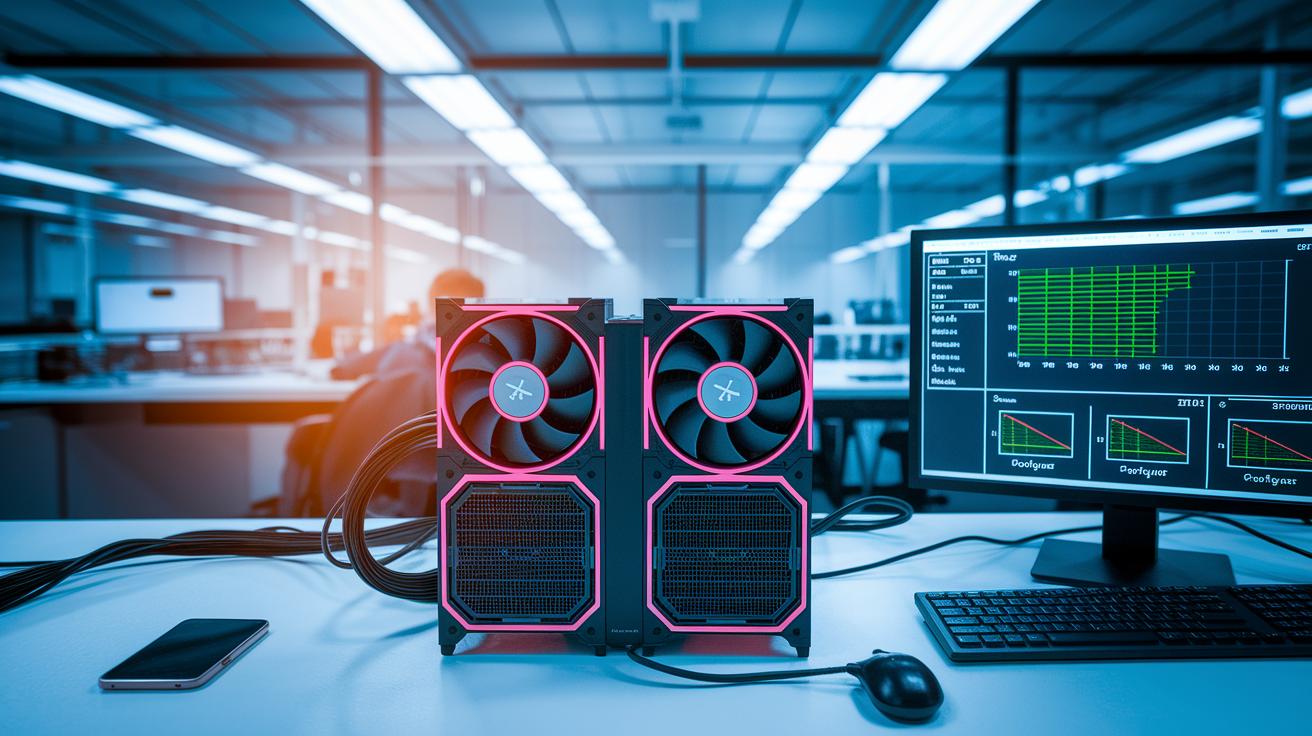
We design GPU security tests with set times and controlled conditions. For basic checks, tests run between 15 and 30 minutes, while deeper validations may take 1 to 2 hours. These tests need proper cooling, a steady power supply, and enough isolation to avoid interference. It is important to record details like room temperature, fan speed, and GPU temperature (keeping it below 85 °C) for repeatable, reliable results. For example, you could run a 30-minute test while logging temperature data every two minutes to spot any early changes.
We recommend running these tests every quarter and after major updates, such as firmware or driver changes. By combining regular performance benchmarks with dedicated security checks, you can spot any drops in the GPU's defense against exploits. This method verifies that the GPU performs well under load and stays protected against new vulnerabilities over time.
Final Words
In the action, we covered a range of GPU security testing angles from firmware scanners to driver exploit assessments, attack simulation frameworks, forensic reviews, CI/CD integrations, and benchmark protocols. Each tool and strategy was selected for performance, support, and comprehensive risk coverage.
By combining these aspects, you can secure your workflows with the best tools for gpu security testing. We hope this guide helps you achieve faster, reliable, and cost-efficient production while keeping your systems safe and well-audited.
FAQ
What does the FurMark GPU stress test do?
The FurMark GPU stress test pushes your GPU to its limits, helping you identify thermal thresholds and stability issues under heavy graphics load.
What are the best GPU stress test and free GPU stress test software options?
Popular and free tools like FurMark and 3DMark are widely used to stress test GPUs, offering insights into performance and thermal management during high-load conditions.
How do GPU test software and online GPU tests work?
GPU test software and online tests simulate intense graphical tasks to measure performance and stability, providing quick assessments without requiring complex installation.
Which tool is best for GPU security testing and monitoring?
While monitoring tools like MSI Afterburner, GPU-Z, and HWMonitor offer real-time performance data, comprehensive security testing needs dedicated suites to detect firmware and driver vulnerabilities.
What is the best GPU monitoring software available?
GPU-Z, MSI Afterburner, and HWMonitor are standout monitoring tools that provide detailed real-time metrics such as temperature, clock speed, and utilization for effective hardware diagnostics.
Is there a reliable way to run diagnostics on my GPU?
Yes, you can run diagnostics on your GPU using a combination of stress tests like FurMark and monitoring tools like GPU-Z to capture performance metrics and identify potential issues.