

Have you ever wondered if the true cost of a GPU cluster is hiding in plain sight? At first, the price tag might seem low. But when you add hardware, energy bills, and admin fees, the expenses can quickly climb into the hundreds of thousands.
In this article, we break down the full cost of ownership from both on-site and cloud views. We explain each cost element, like the one-time purchase versus recurring bills, so you know exactly where your money goes. This clear picture helps you make smarter investment decisions.
GPU Cluster TCO: Comprehensive Cost Overview
We find that knowing the full cost of owning a GPU cluster is key to boosting your return on investment (ROI). Take an on-premises setup with four NVIDIA A100 GPUs. Over three years, its total cost of ownership (TCO) comes to around $246,624. This figure includes an upfront hardware cost of $40,000, $5,000 for networking, plus recurring charges such as $12,000 for data center space and $40,000 each year for a part-time system administrator.
Cloud solutions show a different picture. They charge roughly $6.56 per hour for compute resources and about $0.05 per GB per month for storage. Over three years, compute expenses can total nearly $120,678. Energy use is also vital since electricity accounts for 9.32% of the overall TCO, a significant factor when scaling up clusters.
Key cost drivers include:
- hardware
- networking
- energy
- administration
- facility
- software
Overall, the cost of a GPU cluster blends upfront investments with ongoing expenses. Hardware and networking costs set the base, while energy expenses are critical because large clusters require a lot of power. Administration and facility fees add steady overhead. Cloud models help lower initial costs with pay-as-you-go billing, but they should be compared with physical setups for true efficiency. Balancing these factors leads to smarter decisions on the total cost of ownership for your GPU cluster.
GPU Cluster Capital Expenditure Breakdown
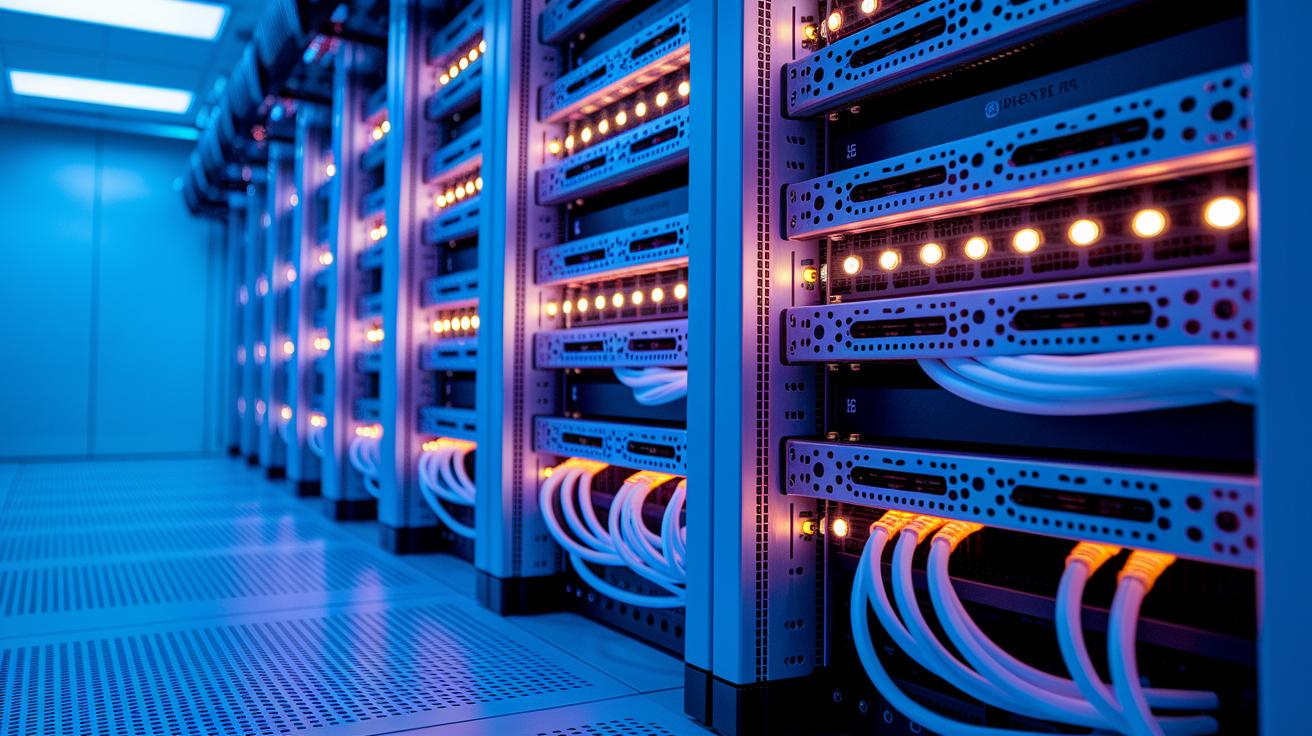
Capital expenditures for GPU clusters come mainly from buying high-performance hardware and the parts that support it. For example, a system you set up on your own with 4 A100 GPUs costs about $40,000 just for the GPUs, plus an extra $5,000 for networking equipment. In a large setup like Meta’s 24,576-GPU H100 chassis, GPUs make up about 65.8% of the total bill-of-materials and CPUs contribute roughly 1.75% of the cost, which in that case comes to nearly $15.97M. Your choice of initial hardware has a direct impact on the overall total cost of ownership (TCO).
| Component | % of BoM | Cost |
|---|---|---|
| GPUs | 65.8% | $40,000 (4 A100) or as part of $15.97M in large clusters |
| CPUs | 1.75% | $15.97M (large-scale example) |
| Networking | N/A | $5,000 (on-premises) |
| Storage | N/A | Varies based on performance needs |
Budgeting for GPU clusters means knowing exactly where your capital is going from the start. By planning for the hardware lifecycle, scaling compute architecture costs, and choosing high-performance parts, you can ensure your initial investment delivers the best performance-to-price ratio over time.
GPU Cluster Operational Expenses and Energy Costs
In high-demand settings, GPU clusters can use between 39 and 40 megawatts. Electricity makes up about 9.32% of the overall cost for high-density H100 clusters, so power bills become a key expense. Even small gains in energy efficiency can lower operating costs significantly. For example, one upgrade to the cooling system cut overall power expenses by 10%. Every watt saved helps your budget.
Facility fees add extra costs. Colocation spaces usually charge around $80 per kilowatt each month, meaning that clusters in data centers face steady, high charges. Cooling systems, which keep equipment at safe temperatures, also add to the expense. However, efficient cooling not only reduces bills but also helps keep your equipment in good shape over time.
Cloud-based GPU services offer a smart alternative to traditional clusters. With pay-as-you-go billing, you only pay when your hardware is running, cutting down on waste during off-peak times. This approach sidesteps the heavy fixed costs of on-premises setups. Plus, many providers use advanced methods to save energy. For practical examples, check out reducing gpu power consumption in clusters (https://studiogpu.com?p=299). Balancing power use, facility fees, and cloud flexibility is vital for managing long-term operating expenses in GPU deployments.
GPU Cluster Maintenance and Administrative Expenses

Our total cost of ownership for GPU clusters already includes regular fees for system administration and facility usage. We build on that by outlining a clear plan for ongoing maintenance that helps boost your return on investment. We plan regular firmware updates, timely hardware replacements, and necessary software licensing to keep your system stable and compliant. For example, running a firmware update every three months can help prevent performance drops and reduce unplanned downtime, making long-term budgets more predictable.
Regular maintenance is key to keeping your system efficient and costs on track. Scheduled hardware updates and support contracts ensure your GPU clusters stay current with changing software needs. This approach avoids sudden cost spikes while extending your hardware’s lifespan. By combining administrative fees with smart maintenance strategies, we offer a complete picture of how ongoing expenses affect your return on investment. This lets you plan predictable spending and maintain strong performance without double counting costs already provided in overall projections.
GPU Cluster Scalability and Depreciation Impact
Break-even occupancy is a key measure for long-term efficiency. Our analysis shows that with a 25% annual depreciation rate, the Hyperplane-A100 server reaches break-even at just 17% occupancy, while the Scalar-A100 does so at 15%. This means that even low usage can make your investment worthwhile. When you plan to scale your system, accurate price forecasting is essential because the depreciation model affects both direct costs and the timing for equipment upgrades.
At 50% utilization over three years with a 25% depreciation rate, the savings become even more clear. The Hyperplane-A100 saves 41.7% compared to a similar cloud instance, cutting costs from $285,893 to $166,602. In our tests, the Scalar-A100 shows a 50.4% saving by lowering the cost to $141,837. These figures show that understanding break-even points and depreciation can help you plan a cost-effective growth strategy that keeps your processing system competitive.
GPU Cluster ROI and Cost Optimization Strategies

We help you get a faster return on investment by removing the need for a $60,000 upfront hardware purchase. Instead of buying expensive equipment, you can use cloud services that let you pay only for what you use. This means you avoid wasting money when the system sits idle. We track metrics like flops-per-dollar (a measure of performance per dollar spent) and break-even occupancy to show you exactly how efficient your spending is. Imagine cutting your unused compute time by 30%, it’s like turning a light drizzle into a steady, productive rain. These figures help you decide if reserved instances might be a smarter choice over on-demand options.
Our key financial performance indicators drive practical steps to lower costs. Techniques such as mixed-precision training (using lower precision formats to speed up calculations) and opting for reserved instance billing can greatly improve your performance-to-price ratio. By aligning these methods with clear data, you turn cost optimization into a process grounded in facts. For example, switching to mixed-precision training increased our throughput while reducing energy bills. This smart approach cuts waste and ensures every dollar you spend directly boosts compute power. By monitoring these metrics regularly and using proven practices, you build a balanced strategy that maximizes ROI and adapts to changing workloads.
GPU Cluster TCO Case Studies
Meta H100 Cluster
Meta’s 24,576-GPU H100 cluster shows how scaling up can affect infrastructure costs. You must plan carefully for cooling, networking, and operations to keep costs in check. This example proves that when design and operational strategies are on point, large deployments can use economies of scale to boost capital efficiency, much like fine-tuning an orchestra where every instrument contributes.
This case also reminds us that building a system with hundreds of GPUs requires robust design and monitoring. For instance, focusing on energy efficiency early in the planning phase can make a big difference. We once refined our cooling strategy and saw our operational expenses drop noticeably.
Lambda A100 Servers
Lambda’s Hyperplane-A100 servers illustrate how carefully optimized hardware settings can lower costs while keeping performance high. This case study goes beyond mere numbers and highlights the importance of analyzing usage patterns. Using a reserved capacity model and fine-tuning occupancy can improve ROI, imagine adjusting your studio’s schedule to maximize render output while reducing idle time.
When compared with AWS p4d.24xlarge instances, achieving a 50% occupancy rate over one year led to significant savings. It’s like balancing the ingredients in a recipe so that every component is just right, ensuring a well-rounded final product.
4×A100 On-Prem vs. Cloud
The comparison between a 4×A100 on-premises system and its cloud version brings different financial models into focus. This case study shows that choosing between capital expenditure and operational expenditure depends on how predictable your workload is and how much flexibility you need. The right solution matches your project’s requirements, not just the upfront cost.
A useful insight is to ask: “Does my workload gain more from a capital investment, or is it better served by scalable, on-demand resources?” This way of thinking helps you decide which model best fits your needs over the long term.
GPU Cluster Future-Proofing and Best Practices

Planning for future GPU clusters means looking well beyond today’s needs. Global datacenters that host clusters pulling over 39 MW are rare and usually require new builds that take 4 to 5 years. With these limits in mind, smart capacity planning means boosting energy efficiency to cut electricity, which makes up 9.32% of total ownership costs. For example, using measures such as optimized cooling and improved power distribution can let you deploy more units within the same power budget. This strategy not only lowers operating costs but also helps your hardware last longer by reducing energy waste.
Building strong partnerships is another smart way to secure your GPU cluster budget for the future. Teaming up with colocation and cloud providers can speed up your capacity expansion and ease heavy upfront capital expenses. These collaborations put you in touch with the latest advancements in infrastructure while giving you flexible deployment options that adjust to your changing workload needs. By using advanced compute budgeting strategies and working closely with vendors, you can ensure your GPU cluster scales efficiently and remains cost-effective for the long term.
Final Words
In the action, we broke down the main cost drivers behind GPU clusters, from capital investments like hardware and networking to ongoing expenses such as energy, maintenance, and administration. We explored scalable strategies and ROI models while highlighting real-world case studies and future-proofing tactics.
This snapshot offers clear insights for managing finances, optimizing performance, and streamlining operations. With the right balance between upfront spending and ongoing costs, you can drive efficiency in your gpu cluster total cost of ownership (tco).
FAQ
What is GPU cluster total cost of ownership?
GPU cluster total cost of ownership describes the full expense you incur, including hardware, networking, energy, administration, facility, and software costs, over the lifetime of your deployment.
What are the main components that drive GPU cluster TCO?
The GPU cluster TCO is influenced by hardware costs for GPUs and networking, energy expenses for power and cooling, administrative salaries, facility fees, and software licensing and maintenance expenses.
How do on-premises and cloud GPU clusters compare in terms of TCO?
On-premises clusters have higher upfront capital expenses for equipment and infrastructure, while cloud deployments use a pay-as-you-go model that often results in lower initial costs and flexible operational spending.
How does energy consumption factor into GPU cluster costs?
Energy consumption represents a significant portion of GPU cluster costs by driving facility charges and cooling expenses, constituting roughly 9.32% of the total cost of ownership in high-density clusters.
How do scalability and depreciation impact GPU cluster ROI?
Scalability and depreciation affect ROI by determining break-even occupancy and long-term cost recovery, where strategic utilization and depreciation scheduling lead to measurable savings compared to cloud benchmarks.
What cost optimization strategies can improve GPU cluster ROI?
Cost optimization strategies include leveraging pay-as-you-go models, reserving instances, using mixed-precision training, and carefully planning hardware investments to avoid high upfront CapEx and reduce idle-time waste.