
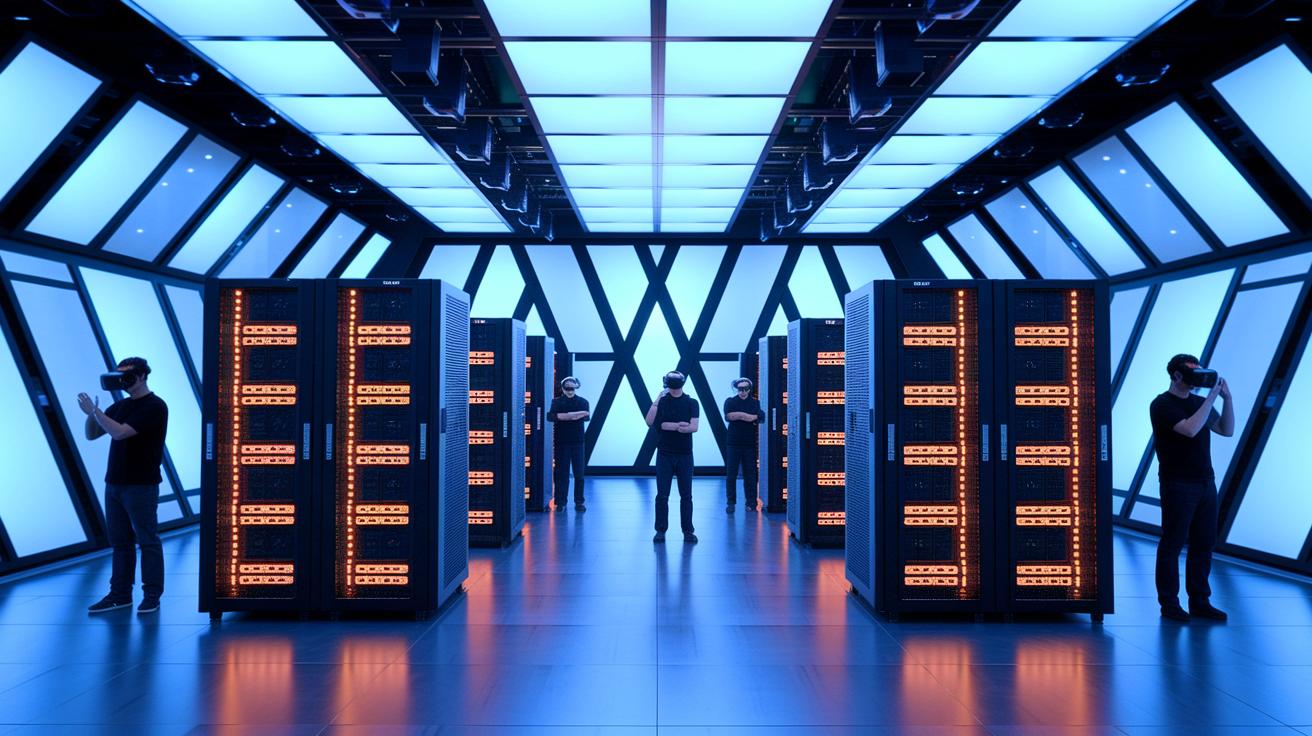
Have you wondered how a GPU cluster (a group of graphics processing units working together) can run a virtual stage production in real time? Our case study shows how we turned several Unreal Engine nodes (computers running the real-time 3D tool) into one smooth and scalable system for big LED displays. We worked closely with Epic Games to build a reliable setup that handles changing visuals with ease. This study proves that clustering GPUs for virtual production is not just possible, it can transform digital storytelling on a large scale.
Unreal Engine Virtual Production GPU Cluster Case Study Overview
Disguise’s technology splits real-time and pre-rendered parts across several nodes. This approach powers LED volumes that cover large, stadium-sized stages.
In a two-year engineering partnership with Epic Games, we created a ready-to-run solution that brings large-scale Unreal Engine visuals to life. The system combines GPUArray Acceleration and ClusterCompute Efficiency, boosting performance and reliability.
During a one-day virtual stage production, a professional hockey team’s story was captured with five custom Unreal environments that changed every two minutes to maintain fresh, engaging visuals. The event was held at the Dell Digital Oasis in Palm Springs, where three workstations equipped with NVIDIA A6000 GPUs handled real-time ray tracing (a method for simulating light), artificial intelligence, and machine learning tasks with impressive speed and stability.
The infrastructure processed complex graphics and dynamic lighting changes smoothly, ensuring that every frame met strict quality standards and matched the creative intent. This case study highlights how technical precision and creative storytelling work together in virtual production. It uses automated asset management and careful node synchronization so that users interact with one unified Unreal asset. At the same time, it maintained high performance under a tight production schedule. With virtual production estimated to hit a market value of $6.79 billion by 2030, this solution proves to be both scalable and impactful.
Unreal Engine Virtual Production GPU Cluster Architecture Details

Our system streams real-time frames and video slices using NDI (network device interface) and our own RenderStream method, then stitches them into final frames at rates up to 25 GB/s for each node. With our Asset Launcher, you only need to pick how many machines you want, and the system automatically assigns render slices to each node. This makes all the nodes work together as one unified 3D Unreal asset. Think of it like a relay race, each frame passes smoothly from one runner to the next with no delays.
Streaming and Compositing Pipeline
NDI handles the standard streaming over the network, and RenderStream works alongside it by smartly slicing frames for quick compositing. Together, they deliver steady output and reliable performance. Each frame is divided into parts that are later reassembled into a synchronized image. Imagine a well-coordinated stage crew where every member plays their part perfectly at the right moment.
Hardware Node Configuration
Below is a table with each cluster node's configuration. This information is essential if you're building a similar setup. You can refer to our detailed hardware guide for more on node assembly and selection.
| Node | CPU | GPU | Memory | Chassis |
|---|---|---|---|---|
| Dell Digital Oasis Workstation | OEM Standard | NVIDIA A6000 | Workstation Specified | Workstation Chassis |
| AMD Threadripper Rack Node | AMD Threadripper 5995WX | N/A | 2 TB | Silverstone RM42-502 on ASUS PRO WS WRX80e-SAGE SE |
Performance Benchmarking for Unreal Engine GPU Clusters
We recently ran tests on our GPU clusters for Unreal Engine. Every render node delivered up to 25 GB/s of data throughput while keeping frame delays below 50 ms in ray-traced scenes captured directly in-camera. In real-time rendering, every millisecond counts.
Directors worked with high pixel counts and intricate virtual sets without any disruptions. Environment changes took around 2 minutes on 8K LED volumes, with smooth transitions and no frame drops.
| Metric | Performance |
|---|---|
| Data Rate | Up to 25 GB/s |
| Frame Latency | Under 50 ms (for ray-traced cameras) |
| Environment Swap Time | Approximately 2 minutes |
| LED Volume Operation | Flawless at 8K with zero frame drops |
These results show that our GPU clusters can handle the high standards of Unreal Engine virtual productions. With this reliable performance, production teams can concentrate on creative decisions while our hardware efficiently manages even the most demanding rendering tasks.
Creative Workflow Integration in Unreal Engine Virtual Production

Our GPU cluster powered real-time scenes in Unreal Engine by simplifying environment design, previsualization, live simulation, and lighting tweaks. We built five custom 3D environments inspired by shows like The Mandalorian, The Batman, Maverick, and Bullet Train. These digital sets changed every few hours to help creative teams switch scenes quickly, keeping the pace lively and the visuals engaging. An experienced on-set Unreal Engine technician handled changes in environment, time of day, weather, and lighting on the fly to maintain a steady, compelling look.
We synced virtual camera rigs with physical ones to capture multi-angle shots that let directors easily switch between wide and close-up views. Our process also used previsualization to let teams try out different camera angles and compositions before finalizing a shot. By mixing proven cinematic techniques with live simulation, we enabled immediate creative adjustments. This approach resulted in an interactive production flow that balanced technical accuracy with creative ideas, helping filmmakers create scenes that are both solid in performance and visually striking.
Challenges and Management Solutions for GPU Cluster Virtual Production
During the one-day production, our GPU cluster faced tight deadlines with no room for error. Every moment was critical, and even a small glitch could have thrown off the entire production. We followed a detailed shot list and planned every step to keep delays at bay. Frequent changes between environments also raised the risk of nodes falling out of sync, so precise coordination was a must.
To overcome these challenges, we used the Asset Launcher to automatically distribute render slices to each node, making them work as one unified system. We also set up real-time node-health monitoring to catch any issues before they could impact performance. An on-site Unreal Engine expert was on hand to make quick adjustments when needed, ensuring that the configuration stayed on track. These techniques, along with the simplified orchestration practices listed under GPU cluster management (https://studiogpu.com?p=223), helped maintain system resilience and lowered technical risks. In the end, this approach delivered a stable and efficient virtual production.
Post-Production Efficiency Gains with GPU Clusters in Virtual Production

Our system captures nearly finished composite images directly in-camera, which makes post-production much quicker. By doing so, we cut down on heavy visual effects and only needed to add simple sand and snow touches along with some color grading. We started editing on the same day as the shoot, chopping the overall post timeline by 60%. The cameras delivered realistic textures and lighting, which reduced the time spent perfecting each shot.
Using a GPU cluster for real-time capture meant that editors, artists, and directors could see footage almost instantly. This rapid access speeds up review sessions and creative tweaks. With less done in post-production, production budgets become easier to manage, and extra funds can be used to boost creative enhancements. This approach trims editing costs while staying true to the director’s vision and keeping up with the fast pace of virtual production.
Modern GPU clusters have truly transformed our workflow by speeding up turnaround times without compromising artistic intent.
Final Words
In the action of an unreal engine virtual production gpu cluster case study, we saw how rendering, real-time ray tracing, and rapid scene swaps merged seamlessly. We explored hardware profiles, automation tools, and performance benchmarks that kept production running smoothly. This case study shows GPU-accelerated solutions driving creative workflows and practical outcomes. We look forward to more efficient, cost-effective pipelines that empower visual storytelling.
FAQ
What does the Unreal Engine Virtual Production GPU cluster case study cover?
The case study outlines a one-day production that integrated real-time and pre-rendered elements using a GPU cluster, detailing technical scope, hardware, production timeline, and market context.
How is the real-time streaming and compositing pipeline set up?
The streaming pipeline uses NDI and proprietary RenderStream to slice real-time frames which are then stitched into final images at data rates up to 25 GB/s per node, ensuring smooth visuals.
What are the key hardware node configurations used in the cluster?
The cluster features three Dell Digital Oasis workstations with NVIDIA A6000 GPUs and a high-end AMD Threadripper PC, detailed further in our documentation at building gpu clusters.
How does the GPU cluster perform in Unreal Engine virtual production?
The GPU cluster sustains up to 25 GB/s per node with sub-50 millisecond frame latency and rapid environment swaps, enabling directors to work with higher pixel counts and complex virtual sets seamlessly.
How does the GPU cluster integrate into creative workflows in virtual production?
The system feeds near-final composited images in real time, supporting on-the-fly adjustments to environments, lighting, and virtual camera rigs, which streamlines previsualization and live simulation.
What production challenges were faced and how were they addressed?
Strict shot-list planning and rapid synchronization of nodes posed challenges that were managed through automated asset assignment, robust node-health monitoring, and an on-site Unreal Engine specialist.
What post-production benefits does the GPU cluster offer?
The in-camera capture produced near-final imagery, reducing post-production work by 60% and speeding up editing and creative iteration cycles for a more efficient workflow.